What If the Biggest Threat to Your Practice Growth Isn’t New Patient Acquisition?
Most dental practices spend significant time, energy, and money trying to attract new patients. They invest in SEO, Google Ads, social media marketing, website improvements, and community outreach. While these strategies are important, there is another opportunity hiding in plain sight-one that many practices continue to overlook.
Patient recall.
Imagine investing heavily in marketing to bring new patients through the door, only to lose them because they never receive timely reminders to return. It is like filling a bucket while ignoring the hole in the bottom.
The good news is that modern dental practices no longer need to rely on manual processes, sticky notes, spreadsheets, or staff memory to maintain patient relationships. Automation has transformed how successful practices manage recalls, improve retention, increase appointment volume, and strengthen long-term revenue.
In 2026, an automated dental recall system is no longer a convenience. It is a necessity.
This guide explores why dental recall automation matters, how it improves patient retention, what every effective recall system should include, and how practices can use automation to support sustainable growth.
Understanding the Dental Recall System
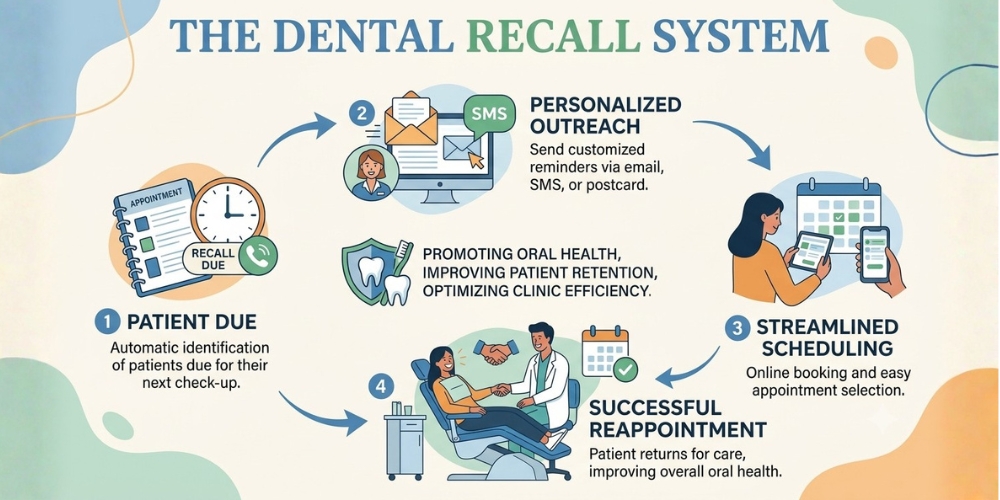
A dental recall system is the process used to remind patients when it is time to schedule their next appointment.
Traditionally, recall appointments focus on preventive care such as:
- Routine cleanings
- Dental examinations
- Periodontal maintenance
- Follow-up treatments
- Preventive screenings
The goal is simple: ensure patients continue receiving recommended care while maintaining consistent engagement with the practice.
Without a structured recall system, patients often delay appointments, forget scheduling timelines, or seek care elsewhere.
Over time, these missed opportunities can significantly impact patient retention and practice revenue.
Why Patient Retention Matters More Than Ever
Many dental practices focus heavily on acquiring new patients while underestimating the value of existing ones.
Retaining patients is often more cost-effective than acquiring new ones.
Existing patients already know:
- Your team
- Your services
- Your office environment
- Your treatment philosophy
They require less persuasion and often contribute additional value through referrals, treatment acceptance, and long-term loyalty.
An effective recall strategy protects these relationships and encourages consistent patient engagement.
The Problem With Manual Recall Systems
Many practices still depend on manual workflows for recall management.
Staff members may:
- Review appointment schedules manually
- Make phone calls individually
- Send reminders inconsistently
- Track responses through spreadsheets
- Rely on personal follow-up systems
While these efforts may work temporarily, they become increasingly difficult as patient volume grows.
Manual systems often create:
- Missed appointments
- Human error
- Inconsistent communication
- Administrative inefficiencies
- Lost revenue opportunities
Automation addresses these challenges while improving overall performance.
What Is Recall Automation?
Recall automation uses software and communication technology to manage appointment reminders and patient outreach automatically.
Instead of relying on staff to remember every follow-up, the system delivers communications based on predetermined schedules and patient needs.
Common automated channels include:
- Email reminders
- SMS messages
- Automated phone calls
- Appointment notifications
- Follow-up sequences
Automation ensures patients receive consistent communication without creating unnecessary workload for team members.
Benefits of Automating Your Dental Recall System
The advantages of automation extend far beyond convenience.
A properly configured recall system can positively impact nearly every aspect of practice operations.
Improved Patient Retention
Regular reminders help patients stay connected to the practice.
When patients receive timely communications, they are more likely to schedule recommended appointments and maintain preventive care routines.
Increased Appointment Volume
Automated recalls help fill schedules proactively rather than reactively.
This creates more predictable appointment flow and improves operational efficiency.
Reduced Administrative Burden
Automation eliminates many repetitive tasks traditionally handled by front-office staff.
This allows team members to focus on patient experience and higher-value responsibilities.
Better Patient Experience
Patients appreciate convenient communication.
Automated reminders reduce missed appointments while making scheduling easier and more accessible.
Higher Revenue Stability
Consistent patient retention contributes to recurring revenue and long-term practice growth.
A reliable recall process helps maintain production levels throughout the year.
Essential Components of an Effective Automated Recall System
Not all recall systems are equally effective.
The most successful systems combine technology, personalization, timing, and patient convenience.
Appointment Reminder Sequences
Multiple reminders typically outperform a single communication.
An effective sequence may include:
- Initial notification
- Follow-up reminder
- Final appointment confirmation
This layered approach improves attendance rates.
Personalized Messaging
Generic reminders often generate lower engagement.
Personalized communication that includes patient names, appointment details, and relevant information tends to perform better.
Multi-Channel Communication
Patients have different preferences.
Some prefer text messages while others respond more effectively to email or phone communication.
Using multiple channels improves overall reach.
Easy Scheduling Options
Patients should be able to confirm, reschedule, or book appointments quickly.
Reducing friction increases response rates and improves convenience.
The Role of SMS Reminders
Text messaging has become one of the most effective communication methods available.
Patients frequently read text messages within minutes of receiving them.
Benefits include:
- High open rates
- Fast delivery
- Convenience
- Immediate visibility
SMS reminders can significantly reduce no-show rates while improving appointment confirmation rates.
Email Automation and Recall Success
Email remains an important component of recall communication.
Unlike text messages, email allows practices to provide additional context and educational information.
Email campaigns can include:
- Appointment reminders
- Preventive care education
- Practice updates
- Oral health tips
- Treatment recommendations
When combined with SMS communication, email contributes to a stronger patient engagement strategy.
Segmenting Recall Campaigns
One-size-fits-all communication rarely produces optimal results.
Different patient groups often require different messaging strategies.
Segmentation may include:
- New patients
- Long-term patients
- Hygiene recalls
- Periodontal maintenance patients
- Treatment follow-ups
- High-value treatment candidates
Targeted communication improves relevance and increases response rates.
Timing Matters More Than Many Practices Realize
The effectiveness of recall communication often depends on timing.
Contacting patients too early may result in low urgency.
Contacting them too late may reduce scheduling opportunities.
Successful practices typically create structured timelines that align with treatment recommendations and patient needs.
Automation ensures these timelines remain consistent.
Reducing No-Shows Through Automation
Missed appointments create scheduling inefficiencies and lost revenue.
Automated reminder systems help reduce no-show rates by keeping appointments top of mind.
Features that improve attendance include:
- Confirmation requests
- Calendar integration
- Reminder sequences
- Rescheduling options
Reducing no-shows improves productivity while maximizing schedule utilization.
Integrating Recall Systems With Practice Management Software
Automation becomes even more effective when integrated with existing systems.
Modern recall solutions often connect directly with:
- Scheduling platforms
- Patient databases
- Treatment plans
- Communication tools
Integration minimizes duplication while improving workflow efficiency.
Practices benefit from a centralized approach to patient communication and scheduling.
Using Recall Systems to Support Preventive Care
Beyond operational benefits, recall automation supports better patient outcomes.
Preventive care remains one of the most important aspects of dentistry.
Automated systems encourage patients to maintain regular appointments and follow professional recommendations.
This benefits both patients and practices by promoting long-term oral health.
Measuring Recall Performance
An automated system should provide measurable insights.
Key performance indicators may include:
- Recall response rates
- Appointment confirmations
- Retention rates
- No-show percentages
- Reappointment frequency
- Revenue generated from recalls
Monitoring these metrics helps practices refine communication strategies and improve outcomes.
Common Recall Automation Mistakes to Avoid
Even well-intentioned systems can underperform if poorly managed.
Common mistakes include:
- Sending too many reminders
- Using generic messaging
- Ignoring patient preferences
- Failing to monitor performance
- Overlooking inactive patients
- Neglecting communication updates
Successful automation balances consistency with personalization.
The Connection Between Recall Systems and Practice Growth
Practice growth is often associated with attracting new patients.
However, sustainable growth depends equally on retaining existing ones.
An automated recall system strengthens retention while supporting:
- Revenue stability
- Schedule efficiency
- Patient satisfaction
- Treatment acceptance
- Long-term loyalty
The cumulative impact can be substantial.
Practices that consistently engage patients tend to experience stronger growth trajectories than those relying solely on acquisition strategies.
Why Automation Is Becoming the Industry Standard
The dental industry continues evolving toward greater efficiency and patient convenience.
Automation is no longer viewed as a luxury.
Patients increasingly expect:
- Digital communication
- Convenient scheduling
- Timely reminders
- Personalized interactions
Practices that embrace automation position themselves to meet these expectations while improving operational performance.
As competition increases, efficiency and patient experience become important differentiators.
Beyond Recall: Building a Complete Digital Growth Strategy
While recall automation is essential, it represents only one component of a comprehensive growth strategy.
Successful practices combine retention initiatives with visibility, branding, content creation, and patient acquisition efforts.
This holistic approach creates multiple pathways for growth while reducing dependence on any single marketing channel.
How Digital Presence Matters Helps Dental Practices Grow
Implementing an effective recall system is important, but long-term success requires a broader digital strategy. This is where Digital Presence Matters helps practices create meaningful and measurable growth.
Digital Presence Matters works with dental practices to strengthen visibility, improve patient engagement, and build stronger brands through integrated marketing solutions.
One of their most valuable services is professional video creation. High-quality video content helps dentists educate patients, explain procedures, introduce team members, showcase office environments, and build trust before the first appointment. Video marketing has become one of the most powerful tools for increasing engagement and improving conversion rates.
Beyond video production, Digital Presence Matters develops strategic social media marketing campaigns that help practices maintain visibility and strengthen patient relationships. Consistent content keeps practices top-of-mind while supporting brand awareness.
The company also provides digital advertising services designed to generate qualified leads and maximize marketing performance. Through targeted campaigns, practices can reach the right audiences at the right time.
Search engine optimization remains a critical component of their approach. Through local SEO, dental SEO, Google Business Profile optimization, keyword targeting, and content development, Digital Presence Matters helps practices improve search visibility and attract more prospective patients.
Branding services ensure consistency across every digital touchpoint. Strong branding creates trust, enhances recognition, and differentiates practices in competitive markets.
Website enhancement services further support growth by improving user experience, mobile responsiveness, loading speed, and appointment conversion pathways. Together, these services create a stronger online presence capable of supporting both patient acquisition and retention.
For practices seeking sustainable growth, Digital Presence Matters provides the expertise, creativity, and strategic guidance necessary to thrive in today’s digital landscape.
Conclusion
The most successful dental practices understand that growth is not solely about attracting new patients. It is also about keeping existing patients engaged, informed, and connected.
An automated dental recall system helps achieve exactly that.
By improving retention, reducing no-shows, enhancing communication, and streamlining operations, automation creates benefits that extend throughout the entire practice.
As patient expectations continue evolving, practices that embrace automation will be better positioned to deliver exceptional experiences while supporting long-term growth.
Ready to elevate your practice’s digital presence and patient engagement strategy?
Contact Digital Presence Matters today.
Info@digitalpresencematters.com
Phone: (925) 940-0705
Remember
- Patient retention is often more cost-effective than constantly pursuing new patient acquisition.
- Automated recall systems improve appointment consistency, reduce no-shows, and enhance patient engagement.
- Combining recall automation with SEO, video marketing, branding, and digital marketing creates a stronger foundation for sustainable growth.
Disclaimer
The information provided in this article is intended for informational and marketing purposes only. Results from recall automation systems, digital marketing strategies, SEO initiatives, and patient engagement efforts may vary based on implementation quality, market conditions, patient demographics, competition, and other factors. Readers should consult qualified professionals before making significant business, operational, or marketing decisions.